
Why tetheredThe honest
The honest
comparison.
Free-flying drones, fixed cameras, or a tethered system — each earns its place. Here is where each one wins, and where each one goes dark.
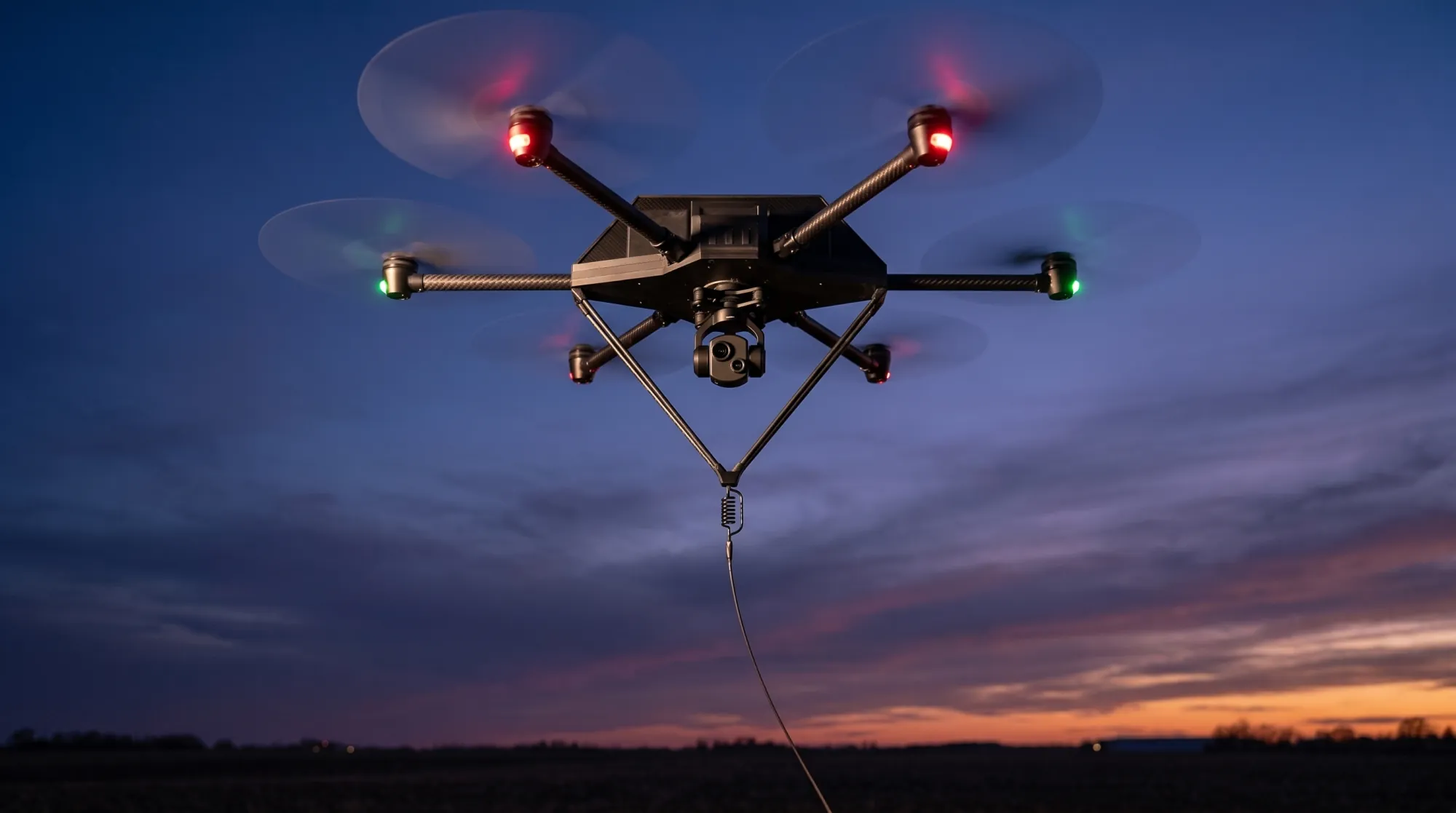
| Apus 100 — tetheredPersistent overwatch | Free-flying droneBattery-powered | Fixed camerasPoles & infrastructure | |
|---|---|---|---|
| Time on station | 8+ hours, continuous | ~20 useful minutes, then it lands | Always on |
| Coverage gaps | None — power runs up the tether | Dark during every charge cycle | Permanent blind spots between poles |
| Vantage point | 100+ ft, repositionable, ±1 m hold | Anywhere, briefly | Fixed forever at pole height |
| Data link | Wired Ethernet up the tether — RF-quiet | Wireless downlink — contested, detectable | Wired |
| Operator load | One operator; station-keeping is automatic | A pilot per aircraft, every flight | Monitoring staff or remote guarding service |
| Setup | Vehicle to vantage in minutes; no site construction | Fast to launch, constant to manage | Trenching, poles, permits — weeks to months |
| Moves with the operation | Case it and redeploy the same day | Yes | No — sunk into the ground |
| Weather | All-weather design target (IP55/56), light rain | Most consumer/prosumer aircraft ground in rain or wind | Weatherproof |
Free-flying figures reflect typical battery-powered multirotors in this class; fixed-camera figures reflect conventional pole-mounted CCTV. Apus 100 figures are committed design targets for the field-deployment program.
The takeawayUse each tool
Use each tool
for what it's for.
Fixed cameras are right for the spots that never change. Free-flying drones are right for the ten-minute look. The gap in the middle — hours of elevated attention, anywhere you park a case — is what the Apus 100 exists for.
Most real deployments combine all three. Apus doesn't replace your cameras — it covers everything they can't see, for as long as the operation runs.
Next step